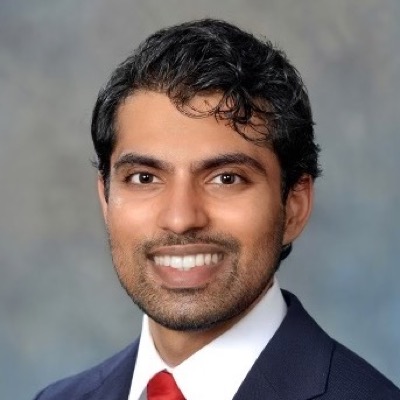
Ophthalmology resident · MD-PhD
Venkata Jonnakuti
Physician-scientist working at the intersection of RNA bioinformatics, AI, and vision.
Physician-scientist working at the intersection of RNA bioinformatics, AI, and vision.
I am a physician-scientist who builds computational tools to understand disease, and I am training to bring them into the eye clinic. My path into research started in medical imaging, quantifying bone, joint, and muscle disease with PET while I was an undergraduate in an accelerated BS/MD program. The more I did, the more I wanted to commit to research fully, so I applied out and pursued an MD-PhD at Baylor, where I found my real home in computation.
During my MD-PhD I became fascinated by alternative polyadenylation, the overlooked layer of gene regulation that decides which version of an RNA a cell makes, and how much. That fascination became PolyAMiner-Bulk, a deep-learning method I built to decode it from RNA-seq data. I have since used it to study how RNA processing goes wrong across cancer, neurological disease, and pulmonary hypertension, turning a subtle molecular signal into something diagnostic.
Now, as an ophthalmology resident, I am pointing that same computational lens at vision: how we interpret OCT scans in glaucoma, where AI can sharpen diagnosis, and how careful, skeptical reading of biological data translates into caring for patients. I am happiest in the space between the algorithm and the bedside.
Education and training
2014 to 2018
B.S. in Molecular Biology through an accelerated BS/MD program. Early research quantifying musculoskeletal disease with PET imaging.
2018 to 2025
MD-PhD in the Medical Scientist Training Program. My PhD in quantitative and computational biology (2020 to 2023) is where I built PolyAMiner-Bulk and mapped alternative polyadenylation across cancer and neurological disease.
2025 to present
Ophthalmology residency, bringing computation to the exam lane.
Deep learning for RNA processing: alternative polyadenylation, transcriptomics, and method development.
Glaucoma imaging, neuro-ophthalmology, and the responsible use of AI in eye care.
Beyond the lab
I co-host LetsTalkAboutPTEN, a podcast that helps patients and families understand PTEN-related disorders.
I tutor anatomy, serve on my MD-PhD program's operating committee, and represent Baylor as an admissions ambassador.
Hackathon wins at Johns Hopkins, Mass General, and the Children's Tumor Foundation; research chair for perinatal health; editorial board for a medical-humanities journal.
Talks & media
LetsTalkAboutPTEN podcast, co-host
Patient-facing series on PTEN gene disorders, since 2020
Challenging age-old assumptions: a late-onset vision loss odyssey
Houston Methodist Ophthalmology Grand Rounds, 2024
Deciphering alternative polyadenylation from bulk RNA-seq
Rice University Ken Kennedy Institute AI in Healthcare Conference, 2023
Wernicke syndrome
Neuro-Ophthalmology Virtual Education Library (NOVEL), University of Utah
Recognition
Outstanding Abstract Award
2026 · ARVO Annual Meeting (Association for Research in Vision and Ophthalmology)
Members-in-Training Outstanding Poster Competition, invited
2026 · ARVO Annual Meeting (top-five abstract score in section)
Donald A. Elliott MD-PhD Scholar
2025 · Medical Scientist Training Program, Baylor College of Medicine
PhD Fellowship in Biomedical Informatics and Data Science
2021 to 2023 · National Library of Medicine, NIH
1st place, Access-to-Care coding challenge
2021 · Johns Hopkins Hospital, out of 125 teams
3rd place, X-Linked Dystonia-Parkinsonism therapeutics challenge
2022 · Massachusetts General Hospital
2nd place, PTEN therapeutics challenge
2021 · Children's Tumor Foundation
Helmsley Charitable Trust Abstract Award
2018 · Endocrine Society
John J. Trentin Scholarship Award for Academic Excellence
2021 · Baylor College of Medicine
Summer Research Fellowship, Undergraduate Scholars
2016 · National Institutes of Health
Collaborations, mentorship, or just trading ideas.